

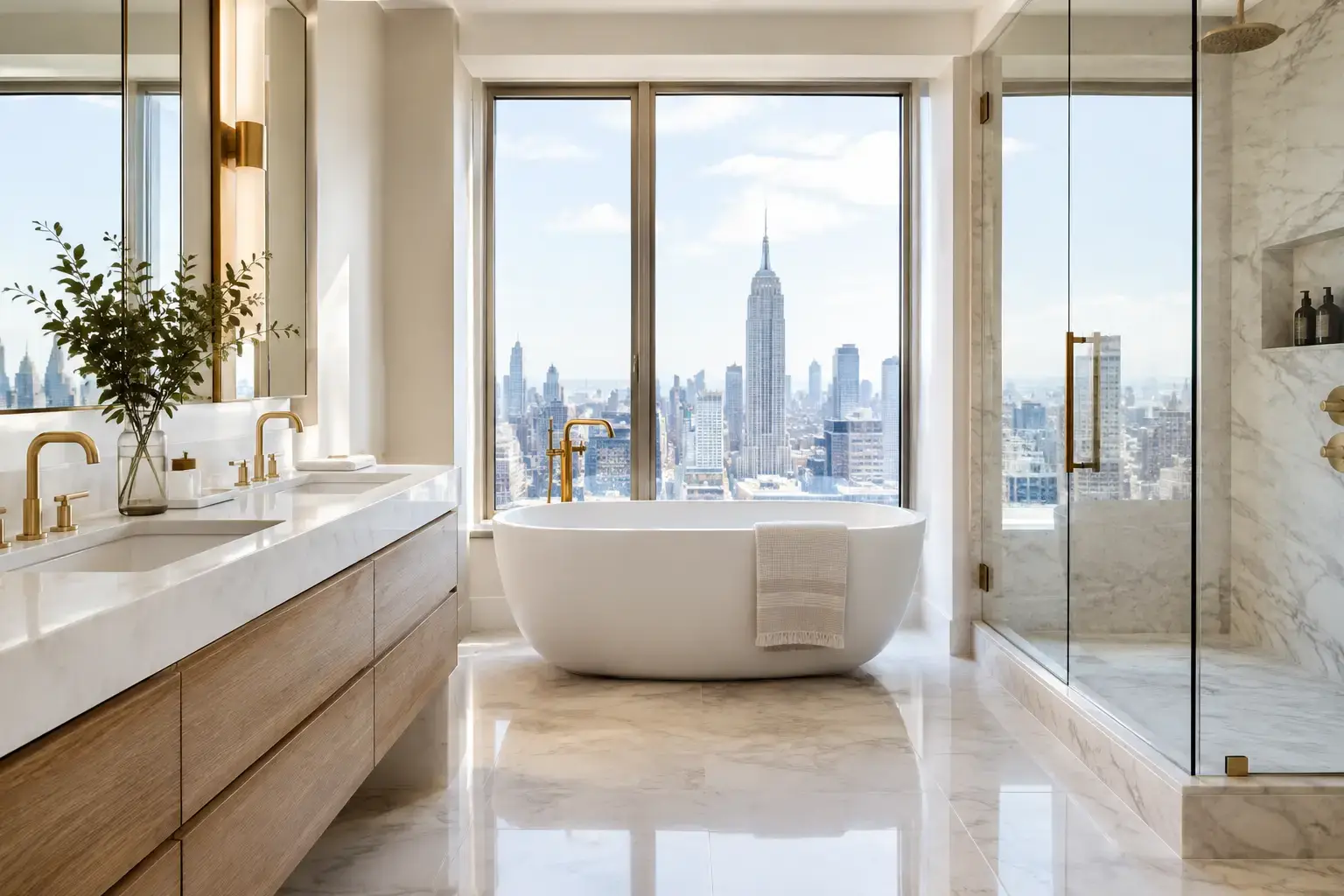
A luxury bathroom should feel effortless when you use it, even though getting there in Manhattan rarely is. This luxury bathroom renovation guide is designed for homeowners who want more than attractive tile and polished fixtures. It addresses the decisions that protect the investment: layout, building approvals, waterproofing, ventilation, material selection, and the disciplined project management required in New York City.
A well-executed bathroom renovation can improve daily life, support resale value, and bring a dated apartment in line with the rest of the home. But in a co-op, condo, townhouse, or prewar residence, the details behind the walls matter as much as the finishes in front of them.
Start With the Experience You Want
Luxury is not defined by the price of a faucet alone. It is the result of proportion, comfort, performance, and craftsmanship working together. Before selecting finishes, decide how the room needs to function for your household.
A primary bathroom may need a larger shower, a double vanity with meaningful storage, radiant floor heating, and lighting that works equally well at 6 a.m. and late at night. A guest bathroom may benefit more from a durable tub-shower combination, easy-to-clean surfaces, and thoughtful storage. In smaller Manhattan apartments, every inch needs a purpose, which often makes planning more valuable than adding more expensive materials.
Be clear about what is non-negotiable. If a curbless shower is the priority, the floor assembly and drain location must be evaluated early. If you want a freestanding tub, confirm that the room has the dimensions, plumbing configuration, and floor capacity to support it. A refined result comes from solving these questions before construction starts, not after tile has been ordered.
Luxury Bathroom Renovation Guide: Plan the Layout First
The layout determines whether a bathroom feels calm or cramped. In many NYC apartments, moving plumbing can expand design possibilities, but it can also add cost, extend approvals, and introduce building-specific restrictions. Keeping major plumbing fixtures close to their existing locations is often the most efficient approach. That does not mean the room must look the same.
A skilled design team can make a modest footprint feel considerably more generous by revising vanity depth, changing a door swing, introducing recessed medicine cabinets, or replacing a bulky tub with a properly detailed shower. Wall-hung toilets and floating vanities can create visual openness, although they require adequate wall depth and careful coordination with plumbing and framing.
For a primary bath, prioritize comfortable clearances around the vanity, shower entrance, and toilet. Crowding premium finishes into a poor layout is a common and costly mistake. It is better to choose fewer, stronger design moves and give them room to work.
Design for Storage, Lighting, and Daily Routines
The most successful bathrooms anticipate the small moments that happen every day. Plan outlets inside or beside a vanity for grooming tools. Include drawer organizers rather than relying on deep, difficult-to-use cabinets. Consider a niche in the shower, but size and place it around the tile layout so it looks intentional rather than improvised.
Lighting should be layered. Ambient ceiling lighting provides overall illumination, while properly placed sconces or vertical vanity lighting help reduce facial shadows. Decorative fixtures can add character, but they should not be the only source of functional light. Dimmers give the room flexibility and create a more restful setting in the evening.
Select Materials That Perform as Beautifully as They Look
Natural stone, large-format porcelain, handcrafted tile, custom millwork, and premium plumbing fixtures can all belong in a luxury bathroom. The right choice depends on the look you want and the maintenance you are prepared to accept.
Marble has depth and character that manufactured materials cannot fully replicate, but it can etch, stain, and require periodic care. Porcelain offers a highly durable alternative with a broad range of stone-inspired finishes. For a busy family bathroom or a frequently used guest bath, porcelain may be the more practical long-term choice. In a primary suite where natural variation is part of the design vision, stone can be worth the added attention.
Do not treat waterproofing as an invisible line item to minimize. A beautiful shower installation depends on a complete, tested waterproofing system below the tile, correct drain detailing, appropriate slopes, and precise grout and sealant work. The same standard applies to steam showers, which require specialized vapor protection and ventilation planning.
Fixtures should be selected for both finish and serviceability. A distinctive unlacquered brass finish may develop a natural patina, while polished chrome is generally easier to match and maintain. Concealed valve systems create a clean appearance, but access requirements and replacement-part availability should be considered before final selection.
Understand Manhattan Building and Permit Requirements
A bathroom renovation in New York City is not simply a design project. It is also a compliance and logistics project. Co-op boards, condo management companies, landmarked buildings, and Department of Buildings requirements can affect the schedule long before demolition begins.
Most buildings require an alteration package and proof of contractor licensing and insurance. They may also require architect or engineer documentation, work-hour restrictions, elevator reservations, floor protection, security deposits, and advance notice to neighbors. Some buildings have strict rules around wet-over-dry conditions, plumbing changes, noise, and debris removal.
A professionally managed renovation should clarify these obligations at the beginning. The project team should coordinate the required documentation, identify permit needs, and build building logistics into the construction plan rather than treating them as last-minute obstacles.
For a typical alteration package, homeowners may be asked to provide:
- Detailed architectural or scope-of-work drawings
- Certificates of insurance that meet building requirements
- Contractor licensing and workers' compensation documentation
- Permit filings or approval documentation when required
- A clear construction schedule and building access plan
Requirements vary widely by building. A prewar co-op on the Upper West Side may operate very differently from a newer Tribeca condominium. Early due diligence helps prevent a finished design from being delayed by rules that could have been addressed during planning.
Build a Budget Around Scope, Not Wishful Allowances
Luxury bathroom costs in Manhattan are shaped by more than finishes. Labor, waterproofing, plumbing, electrical upgrades, permits, building requirements, custom fabrication, delivery logistics, and site protection all influence the final investment.
The most reliable budget starts with a detailed scope and itemized estimate. It should distinguish between construction costs and allowances for materials such as tile, fixtures, stone, lighting, and cabinetry. That level of clarity gives homeowners a realistic way to compare options and understand where changes will have the greatest impact.
Reserve a contingency for conditions that are not visible until demolition, particularly in older apartments. Uneven framing, aging pipes, hidden water damage, inadequate electrical capacity, and subfloor issues are all possible. A contingency is not a sign of poor planning. It is a practical protection against making rushed decisions when the existing conditions are exposed.
If the budget must be prioritized, protect the work behind the walls first. High-quality waterproofing, plumbing, electrical work, ventilation, and skilled installation have a far greater effect on long-term performance than a slightly more expensive decorative fixture.
Choose a Team That Can Manage the Entire Project
A high-end bathroom renovation requires coordination across design, procurement, approvals, construction, and closeout. Splitting those responsibilities among multiple independent parties can work, but it places more management pressure on the homeowner. For busy Manhattan owners, a single accountable renovation partner can provide a more controlled path from concept to completion.
Look for clear communication, documented scope, proof of insurance, established trade relationships, and a process for addressing changes. Ask how the team handles building coordination, protects occupied areas of the home, manages deliveries, and communicates progress. The answers will reveal whether the company is prepared for the realities of an NYC renovation.
At Home Design & Co, the goal is to make the process feel organized from the initial in-home consultation through design, estimating, construction, and final detailing. That means treating the bathroom as both a design statement and a technical installation that must perform for years.
Avoid Decisions That Create Expensive Rework
Ordering materials before final measurements, changing fixtures after rough plumbing is complete, and choosing tile without confirming lead times can disrupt an otherwise well-planned project. Custom vanities, specialty stone, and imported fixtures often require longer procurement windows. Final selections should be coordinated with the construction schedule, not made in isolation.
It is also wise to think beyond the photographs. Matte black fixtures can be striking but may show water spots. Open shelving looks airy but exposes everyday clutter. Large slabs create a dramatic effect but require careful access planning in elevator buildings. There is no universal right answer, only the solution that fits your maintenance preferences, building conditions, and desired experience.
The best luxury bathroom is not the one with the most expensive finish schedule. It is the one that feels considered every day: warm underfoot, easy to use, quietly well lit, expertly built, and managed with the level of care a Manhattan home deserves.