

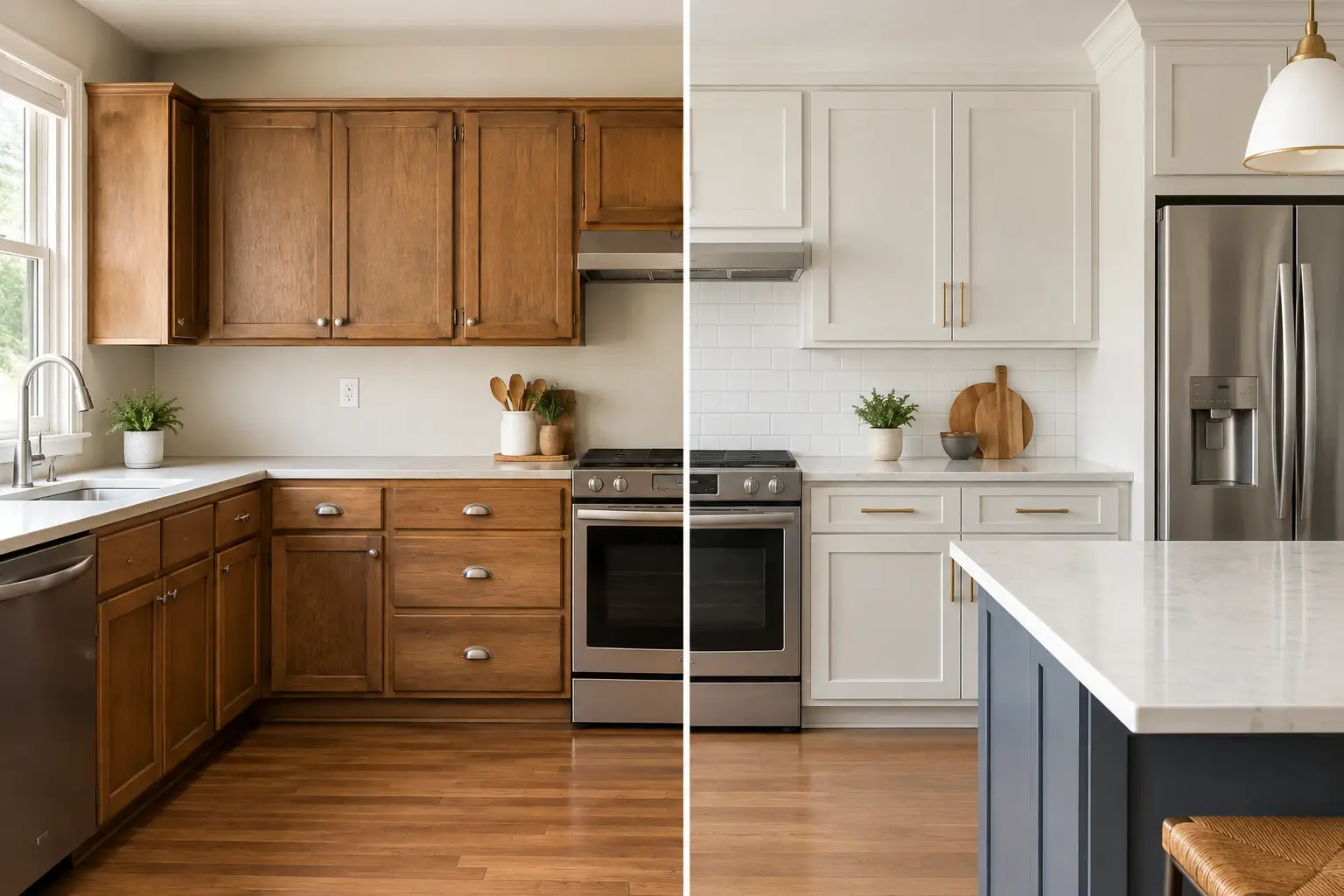
A Manhattan kitchen can look dated long before it stops working. Cabinet doors may carry years of wear, the finish may feel too orange or too heavy, and the overall room may no longer reflect the quality of the apartment. The question of refinishing versus replacing cabinets is not simply about saving money. It is about deciding whether your existing cabinetry is a strong foundation for a refined renovation or a limitation that will compromise the finished kitchen.
For many homeowners, cabinet refinishing is an appealing shortcut. For others, it becomes an expensive cosmetic layer over poor storage, failing construction, and an outdated layout. The right decision starts with an honest evaluation of what is behind the doors, not just what is visible from across the room.
Refinishing Versus Replacing Cabinets: Start With Structure
Refinishing makes sense when the cabinet boxes are well built, securely installed, and properly suited to the kitchen's current layout. Solid wood doors, quality plywood boxes, reliable drawer construction, and cabinets that remain level and square can often be transformed dramatically with professional preparation and finishing.
The key word is professionally. A high-end painted or stained finish depends on thorough cleaning, degreasing, sanding, repair, priming, spraying, and curing. Kitchen cabinets collect cooking residue and hand oils over time, especially around pulls, cooktops, and frequently used drawers. Skipping proper preparation can lead to peeling paint, visible grain, uneven color, or a finish that chips prematurely.
Replacement becomes the stronger choice when the existing cabinets have water damage, swollen particleboard, sagging shelves, delaminating surfaces, broken drawer systems, or doors that cannot be aligned. In those situations, refinishing may improve the appearance temporarily, but it will not correct the underlying problem.
Cabinet quality also matters. A well-made older cabinet can be worth preserving, while a relatively new but low-grade cabinet may not be. During a renovation consultation, an experienced contractor should assess the boxes, joinery, hardware, wall attachment, and condition around the sink before recommending either path.
When Cabinet Refinishing Is the Right Investment
Refinishing is often the appropriate choice when you like the kitchen's footprint and the storage works well for your household. If the dishwasher, refrigerator, sink, and cooking zones are in sensible locations, a new cabinet color and updated hardware can change the room without introducing the expense and disruption of a full rebuild.
This approach is especially effective in prewar apartments and established Manhattan residences with custom cabinetry that was originally built to fit irregular walls, radiators, soffits, or unusual ceiling conditions. Replacing those cabinets may require significant custom fabrication to achieve the same tailored fit. If the original construction is sound, refinishing can preserve that value while bringing the kitchen into a more current design direction.
A dark stained kitchen can become a softer painted space. Traditional raised-panel doors can take on a cleaner, more tailored appearance in a warm white, mushroom, deep green, charcoal, or custom color. New pulls, concealed hinges where feasible, improved lighting, a new backsplash, and upgraded countertops can further elevate the result.
Refinishing is also a good strategic option when your renovation scope is focused elsewhere. If you are prioritizing a luxury bathroom renovation, millwork, flooring, or a larger home project, restoring quality cabinets can allow you to direct the kitchen budget toward the finishes and upgrades that will have the most impact.
That said, refinishing is not always inexpensive. Detailed prep, in-place protection, dust control, spray finishing, and careful coordination all require skilled labor. In a premium home, the finish quality must hold up under close inspection. A low-cost cabinet paint job is rarely a substitute for a professionally managed refinishing process.
When Replacing Cabinets Delivers Better Value
Replacing cabinets is the better long-term decision when your kitchen needs to function differently, not merely look different. A beautiful new finish will not create deeper drawers, improve a narrow aisle, solve inadequate pantry storage, or make room for integrated appliances.
Many older Manhattan kitchens were designed around smaller appliances and different household routines. Homeowners today may want panel-ready refrigeration, a larger range, concealed waste and recycling, appliance garages, charging drawers, pull-out pantry storage, or a better entertaining layout. Those improvements usually require new cabinetry and a coordinated design plan.
Replacement is also the clearer path when you are moving walls, relocating plumbing or gas, altering electrical service, or changing the kitchen footprint. Once demolition and infrastructure work are part of the scope, trying to preserve cabinets can create unnecessary compromises. New cabinets allow the design, mechanical work, countertop plan, and appliance specifications to work together from the beginning.
For luxury renovations, replacement gives you greater control over proportion and detail. You can select door style, wood species, paint finish, drawer configuration, interior accessories, paneling, crown details, and hardware as one integrated composition. The result is not just a newer kitchen. It is a kitchen designed around the residence and the way you live in it.
Cost Is More Than the Cabinet Price
Homeowners often compare refinishing and replacement by looking only at the visible cabinet quote. In New York City, the real cost includes the work needed around the cabinets and the logistics required to complete it correctly.
Refinishing can reduce material costs and limit demolition, but it still requires protection of floors, counters, appliances, and adjacent rooms. If cabinets are finished in place, the work must be carefully planned to minimize dust, odors, and disruption. In a co-op or condominium, building rules may also affect work hours, elevator use, debris removal, insurance documentation, and contractor access.
Replacement involves more variables. Demolition, disposal, delivery scheduling, cabinetry lead times, installation, countertop templating, plumbing reconnection, electrical modifications, permits, and building coordination all need to be sequenced correctly. A detailed estimate should separate these categories so you understand what is included and where allowances or selections may affect the final investment.
The lowest upfront number is not always the least expensive decision. Refinishing cabinets that need frequent touch-ups or replacing doors around failing cabinet boxes can create a second project later. Conversely, removing well-built cabinetry solely because the color is dated can spend budget that might be better used for a superior countertop, custom lighting, or upgraded appliances.
Design Flexibility Is the Deciding Factor
The most useful question is simple: are you trying to refresh the kitchen you have, or create the kitchen you want?
If the answer is a refresh, refinishing may provide an elegant result with less construction. It works best when the cabinet proportions are attractive, the door style supports your preferred aesthetic, and the layout already serves your daily routines.
If the answer is a transformation, replacement is usually more appropriate. New cabinetry gives the design team freedom to improve clearances, establish a stronger focal point, build storage around specific appliances, and create a more intentional relationship between the kitchen and adjoining living areas.
Door style deserves particular attention. Some existing doors can be refinished beautifully but still read as visually busy or dated. Paint can soften their appearance, but it cannot change the profile, proportions, or spacing. If you want a streamlined slab front, a tailored Shaker style, a rift-cut oak contemporary kitchen, or fully integrated paneling, replacement is the more direct path.
Manhattan Renovation Logistics Can Change the Recommendation
In a single-family home, cabinetry decisions are largely driven by design and budget. In Manhattan apartments, execution adds another layer. Freight elevator reservations, limited loading access, restricted construction hours, building insurance requirements, and board approvals can affect both schedule and scope.
Refinishing may reduce the volume of demolition and deliveries, which can be an advantage in buildings with strict access rules. Yet on-site finishing also requires thoughtful containment and ventilation planning. Replacement brings more deliveries and debris but can be more predictable when materials are fabricated off-site and installed according to a clear schedule.
This is why the decision should be made early, before appliances, countertops, and construction dates are locked in. A coordinated plan protects the design intent and reduces the risk of costly changes after work begins.
How to Make the Right Choice With Confidence
Before committing, evaluate the cabinet boxes, door construction, hardware, layout, and storage needs together. Ask whether the current kitchen supports how you cook, entertain, shop, and organize your home. Then compare a professional refinishing scope against a full replacement scope that accounts for every related trade and building requirement.
At Home Design & Co, that evaluation is part of creating a renovation plan that is practical as well as polished. The goal is not to sell more construction than you need. It is to recommend the path that protects your investment, suits your residence, and delivers a finished kitchen that feels considered in every detail.
A well-executed cabinet decision should leave you with more than a better color or newer doors. It should make the kitchen easier to use, more enjoyable to come home to, and appropriate for the standard of the rest of your space.