

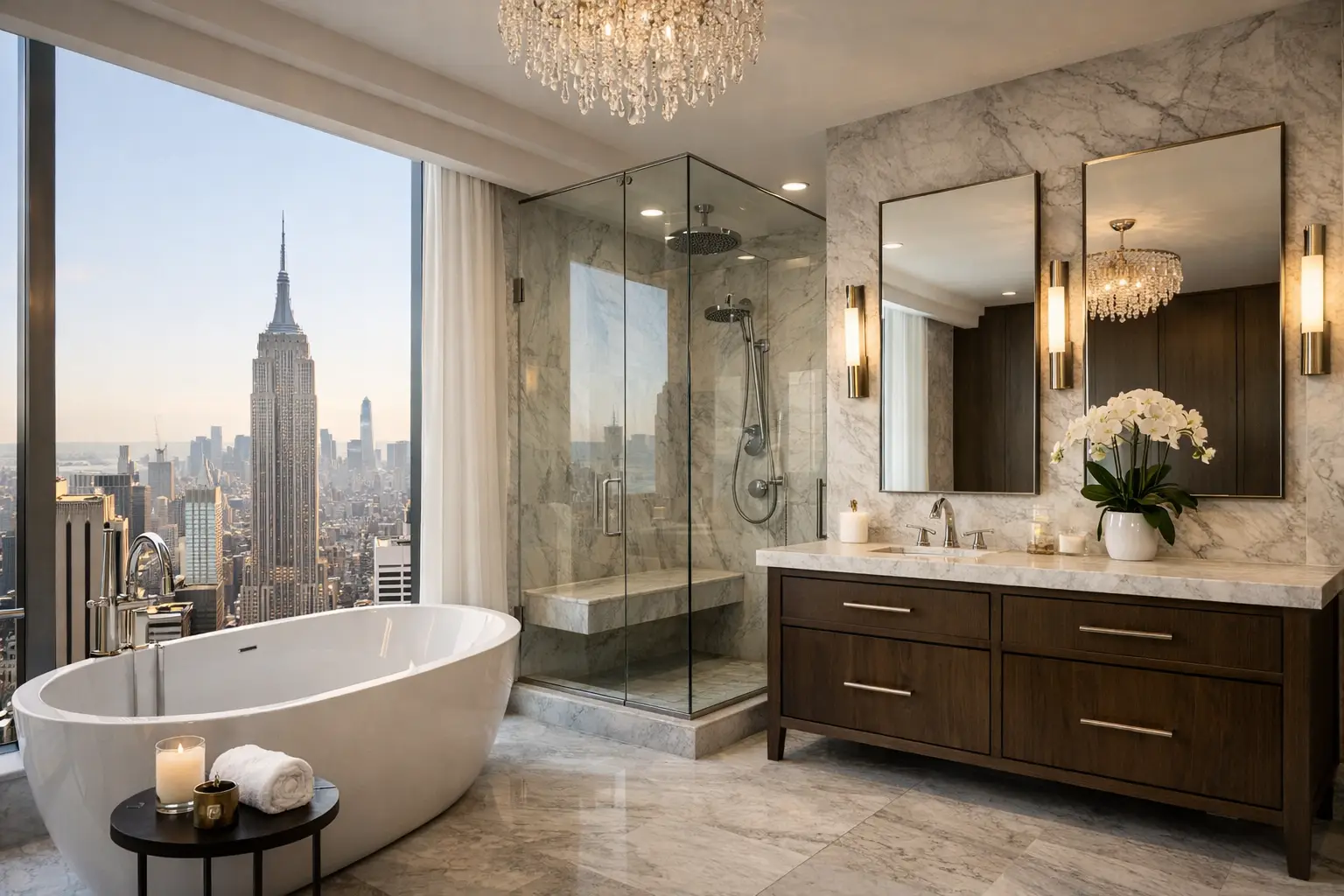
A true luxury bathroom renovation Manhattan homeowners feel good about is not defined by marble alone. It is defined by control. In this city, the best bathroom projects are the ones that look exceptional and run properly behind the walls, meet building requirements, stay organized, and respect the realities of apartment living.
That matters more in Manhattan than almost anywhere else. You may be working within co-op rules, condo board approvals, strict work hours, elevator reservations, limited staging space, and aging plumbing infrastructure. A bathroom can be one of the smallest rooms in the home, but it carries some of the highest stakes. When the finishes are expensive and the building conditions are complex, execution is what separates a polished renovation from a stressful one.
What luxury means in a Manhattan bathroom
Luxury is often mistaken for excess. In practice, the most successful bathrooms in neighborhoods like Tribeca, the Upper East Side, Chelsea, and the West Village are carefully edited. The room feels calm, tailored, and precise. Storage is integrated. Lighting is layered correctly. Tile layouts are intentional. Fixtures are selected not just for appearance, but for performance, maintenance, and compatibility with the building.
That last point is where many projects go sideways. A statement tub may look perfect in a showroom, but it may not make sense for the available floor plate, the freight path, or the daily needs of a busy family. A wall-mounted fixture package can create a clean architectural look, but the wall depth, rough-in conditions, and service access all need to be planned properly. In Manhattan, design decisions cannot be separated from logistics.
A luxury bathroom should also support how you live. For some homeowners, that means a spa-like primary bath with radiant heat, a steam shower, and natural stone. For others, it means better circulation, custom medicine cabinets, high-function storage, and a quieter, better-lit room that feels elevated every morning. The answer depends on the apartment, the building, and the people using the space.
Why luxury bathroom renovation in Manhattan needs tighter planning
Bathroom renovation in Manhattan is less forgiving than it appears. You are building inside a dense urban environment where one missed detail can affect timelines, costs, or approvals. Older buildings may reveal uneven floors, outdated risers, nonstandard framing, or waterproofing concerns only after demolition begins. Newer buildings come with their own limits, especially around noise, wet-over-dry restrictions, and product approvals.
This is why planning has to go beyond mood boards. A serious renovation starts with field measurements, an understanding of building rules, clear fixture specifications, and a practical review of what can actually be installed. If the project requires permits, they need to be handled correctly. If the building requires certificates of insurance, alteration agreements, and scheduled deliveries, that paperwork needs to be organized before construction starts.
For busy homeowners, this is usually the real value of a full-service renovation partner. The goal is not just to produce a beautiful result. It is to reduce risk, create clarity, and keep the project moving in a controlled way.
The features that actually elevate the room
The best high-end bathrooms feel expensive because the details are disciplined. Materials matter, but the way they are assembled matters just as much. Large-format porcelain can create a clean, modern envelope with less maintenance than some natural stones. Slab applications reduce grout lines and create visual calm, but they require careful fabrication and installation. Honed finishes may feel softer and more understated than polished surfaces, though they can show wear differently over time.
Lighting is one of the most overlooked upgrades in luxury bathroom renovation Manhattan projects. A single overhead fixture will flatten the room and make daily routines harder. Proper vanity lighting, recessed ambient lighting, and accent lighting within niches or under floating vanities create a more flattering, functional environment. The result is not flashy. It simply feels finished.
Storage is another quiet marker of quality. Custom vanities, recessed medicine cabinets, linen towers, and built-in shower niches help the room stay visually clean. In a Manhattan apartment, where square footage is valuable, this kind of planning often matters more than adding another decorative feature.
Comfort upgrades also deserve a practical lens. Radiant heated floors are popular for good reason, especially in primary bathrooms. Steam showers can be a worthwhile investment, but only when the enclosure, ventilation, and waterproofing are designed for it from the beginning. Smart toilets, integrated bidet functions, and touchless controls can add convenience, though the electrical and plumbing requirements need to be factored in early.
Budget expectations and where the money goes
Luxury means different things at different price points, but in Manhattan, costs are driven by more than finish selections. Labor, logistics, permitting, protection requirements, demolition conditions, and building compliance all shape the budget. So does the level of customization.
A homeowner may compare two bathrooms with similar square footage and wonder why one costs meaningfully more. Usually the answer is in the details. Custom millwork costs more than stock cabinetry. Premium plumbing fixtures come with higher material costs and often more demanding installation requirements. Natural stone fabrication, heated flooring, niche lighting, slab walls, and high-performance shower systems all raise the level of the project.
Then there is the city itself. Deliveries may need to be timed around building access. Debris removal must follow building protocol. Work may be limited to narrow weekday windows. If your contractor is not accounting for those realities in a detailed estimate, the project may look attractively priced at the start and become expensive later.
That is why transparency matters. A well-structured estimate should spell out scope, allowances, exclusions, and responsibilities clearly. High-end clients are not just paying for finishes. They are paying for predictability.
Choosing the right team for a luxury bathroom renovation Manhattan project
In Manhattan, a bathroom renovation is not the place to assemble a loose network of vendors and hope they coordinate well. The cleaner approach is one accountable team managing design, estimating, scheduling, approvals, construction, and closeout.
That does not mean every project needs the same level of intervention. Some bathrooms are straightforward cosmetic upgrades. Others require layout changes, plumbing relocation, electrical upgrades, or full waterproofing rebuilds. But across the board, homeowners benefit from a process that is organized from the start.
Look for signs of real operational strength. Is the contractor licensed and properly insured? Do they understand co-op and condo alteration requirements? Can they produce detailed cost breakdowns instead of vague lump-sum numbers? Do they have a track record of high-end work in Manhattan apartments? Do they communicate clearly about lead times, approvals, and what happens if hidden conditions are uncovered?
Those questions matter because bathrooms concentrate risk. You are dealing with water, drainage, ventilation, electricity, and finish materials in a compact footprint. Precision is not optional.
Companies like Home Design & Co position themselves around this exact concern - not simply delivering a refined design, but managing the full path from consultation and planning through construction and logistics. For Manhattan homeowners, that kind of control is often what makes the renovation experience feel worth it.
Avoiding the most common mistakes
The biggest mistake is treating the bathroom like a finish-first project. Homeowners understandably focus on stone, fixtures, and visual references, but the hidden work determines whether the room performs well long term. Waterproofing, substrate preparation, slope, ventilation, plumbing coordination, and electrical planning are not glamorous, yet they are what protect the investment.
Another common issue is underestimating lead times. Many luxury items are special order, and in a tightly scheduled Manhattan renovation, one delayed fixture can affect multiple trades. Early selection and procurement are part of good project management, not an administrative afterthought.
It is also easy to over-design a compact room. More features do not always create a better experience. A bathroom with cleaner lines, better lighting, and fewer but stronger materials often feels more expensive than one crowded with accents and competing details.
What a smooth project should feel like
A well-run bathroom renovation should feel structured from the first conversation. You should understand the design direction, the expected investment range, the building requirements, and the construction path before demolition begins. During construction, communication should stay active and specific. You should know what is happening, what decisions are pending, and how the project is tracking.
That is especially important for Manhattan clients who are balancing work, travel, family, and property management responsibilities. The renovation team should be reducing your mental load, not adding to it.
When the process is handled correctly, the finished room does more than photograph well. It supports daily life with less friction. It feels measured, quiet, and technically sound. And in a city where renovation mistakes are expensive, that kind of confidence is part of the luxury.
If you are considering a bathroom upgrade, start with the part most people skip - choose a team that can manage complexity as well as design. In Manhattan, that is usually the difference between a beautiful idea and a beautiful result.