

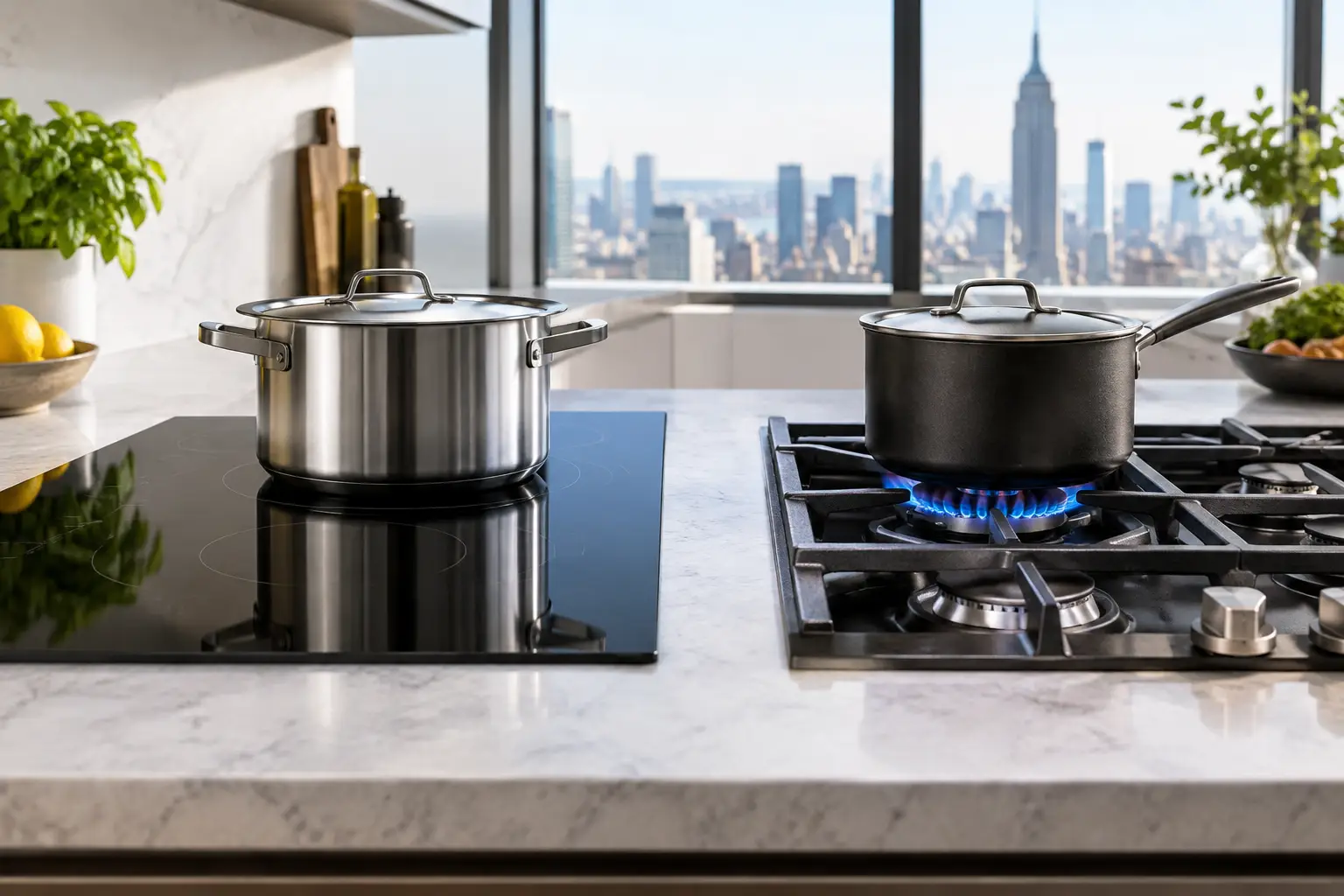
A cooktop decision can affect far more than the look of your new countertops. In a Manhattan apartment, an induction gas comparison often reaches into electrical capacity, ventilation, building approvals, cabinet planning, and the daily rhythm of how your household cooks. The right answer is not simply the newest appliance or the most familiar flame. It is the option that performs beautifully within the realities of your home and renovation.
For many luxury kitchen remodels, induction is the stronger long-term choice. For others, gas remains practical, especially where electrical upgrades would create disproportionate cost or building complexity. A thoughtful decision starts with how the kitchen will be used, then accounts for the infrastructure behind the walls.
Induction vs. Gas: The Performance Difference
Gas has a loyal following for good reason. A visible flame provides immediate visual feedback, and many experienced cooks are comfortable adjusting heat by instinct. Gas ranges also work with nearly every type of cookware, including rounded woks and older pots that are not magnetic.
Induction heats the pan directly through a magnetic field rather than heating the air around it. The result is exceptionally fast boiling, precise low-temperature control, and a cooler cooking surface. When the pan is removed, the active heating stops. For households with children, frequent entertaining, or compact kitchens, that added safety and comfort can be meaningful.
The difference is especially noticeable with responsive cooking. Induction can bring a pot of water to a boil quickly and reduce heat with very little lag. Gas delivers responsive flame control, but the grate, pan, and surrounding air continue to hold heat after the burner is turned down. Neither approach makes someone a better cook, but each creates a distinctly different experience at the range.
For clients who value a clean, architectural kitchen, induction also has a visual advantage. Its flat glass surface can feel integrated and restrained, particularly within contemporary cabinetry and natural stone. A gas cooktop introduces more texture through grates, knobs, and burner components. In a classic or transitional Manhattan kitchen, that visual presence may be exactly what the design needs.
Induction Gas Comparison: Ventilation and Indoor Air
Ventilation should be considered before choosing either appliance. A gas range produces combustion byproducts, moisture, and heat inside the kitchen. A properly designed, ducted range hood is strongly preferred wherever building conditions allow. In a New York City apartment, however, exterior venting can be limited by façade restrictions, shaft access, landmark rules, and co-op or condo requirements.
Induction does not create combustion emissions at the cooktop, but it does not eliminate the need for ventilation. Searing, frying, steam, and cooking odors still need to be managed. The good news is that an induction kitchen may place less demand on the hood for heat and combustion removal, which can be helpful in tightly planned apartments.
Recirculating hoods can be a practical solution where ducting is not permitted, but they should be selected carefully. They can help reduce odors and grease, yet they do not perform like a properly ducted system. During design, the hood should be evaluated alongside the range, ceiling height, cabinet layout, makeup air requirements, and building rules - not as an afterthought.
The Installation Question Most Homeowners Miss
The biggest practical factor in an induction gas comparison is often not cooking preference. It is power.
A full-size induction range typically requires a dedicated 240-volt circuit with substantial electrical capacity. In an older Manhattan apartment, the existing panel may not have enough room or service capacity to support it without upgrades. That can involve a new electrical panel, coordination with building management, licensed electrical work, and, in some cases, utility-related approvals.
Gas may appear easier when a gas line already exists, but that assumption deserves scrutiny. Existing gas piping may require modification to meet the new appliance location and current code requirements. The line must be correctly sized, accessible shutoff provisions must be addressed, and the work must be coordinated with plumbing and inspection requirements. If the building has restrictions around gas work, scheduling and approvals can affect the renovation timeline.
In a full gut renovation, either option can be planned efficiently because walls, floors, and ceilings are already open. In a more limited kitchen update, the cost difference can shift dramatically. Installing a new high-capacity electrical circuit through a finished apartment may be more disruptive than retaining an existing gas location. Conversely, relocating or upgrading gas service may create more complexity than installing induction in a home with an updated electrical panel.
This is why a professional site assessment matters. The appliance choice should be confirmed only after the project team has reviewed the panel, available amperage, gas conditions, hood path, cabinet specifications, and building alteration agreement.
Cookware, Cleaning, and Everyday Living
Induction requires magnetic cookware. Cast iron, many stainless-steel pans, and enamel-coated iron generally work well. Aluminum, copper, glass, and some stainless cookware will not work unless they have a magnetic base. A simple magnet test can identify compatible pieces, but homeowners planning a premium kitchen should also review the quality and condition of their cookware before finalizing the appliance package.
Gas offers broader cookware compatibility and is particularly useful for open-flame techniques. It can accommodate a traditional round-bottom wok with the right burner configuration and wok ring. For cooks who regularly char peppers, toast tortillas directly over flame, or prefer the tactile ritual of gas cooking, that may carry genuine value.
Cleaning is easier with induction. Its uninterrupted glass surface wipes down quickly, without burner caps, grates, or recessed areas collecting grease. Gas cooktops require more regular detailing, especially after high-heat cooking. This is not a minor consideration in a home where the kitchen is used every day and expected to remain presentation-ready.
There is also a heat-comfort difference. Gas adds noticeable warmth to the kitchen, which can be welcome in winter but unpleasant during summer entertaining. Induction transfers more energy into the cookware, not the room. In a smaller apartment kitchen, that efficiency can make daily cooking more comfortable.
Cost: Look Beyond the Appliance Price
The purchase price alone does not tell the full story. Both premium gas and induction ranges can carry significant costs, particularly when selecting professional-style brands, integrated ventilation, specialty finishes, and custom panel or millwork coordination.
Installation conditions are where budgets can separate. Induction may require electrical upgrades, while gas may require piping modifications, inspection coordination, and more intensive ventilation planning. If the selected range is wider or heavier than the existing appliance, cabinetry, floor reinforcement, and delivery logistics may also need attention.
For Manhattan homeowners, building requirements are part of the budget conversation. Co-op boards and condo management may request certificates of insurance, licensed contractor information, alteration plans, and approvals before work begins. Some buildings limit work hours, elevator access, or wet and gas-related modifications. A detailed estimate should identify these conditions early so a range selection does not trigger late-stage changes.
A well-managed renovation does not treat these costs as surprises. It identifies the required electrical, plumbing, ventilation, and building coordination before the final scope is locked.
Which Choice Fits Your Kitchen?
Choose induction when you want a refined, low-profile look, fast and precise cooking performance, easy cleanup, and a cooler kitchen environment. It is particularly compelling when the apartment already has sufficient electrical capacity or when a full renovation makes upgrades straightforward.
Choose gas when you strongly prefer cooking with flame, rely on non-magnetic cookware or flame-based techniques, and have an existing gas setup that can be safely adapted within building and code requirements. Gas can also suit traditional kitchen designs where a professional range is intended to be a visual focal point.
For some households, the best solution is not strictly one or the other. A carefully planned kitchen can pair induction with a gas cooktop, or include an induction range alongside a separate specialty appliance. This approach can be useful for serious cooks, but it requires more coordination and should be justified by how the kitchen will actually be used.
The most successful kitchen decisions begin with the home, not the showroom floor. Confirm the infrastructure, understand the building constraints, and select the appliance that supports both your cooking style and the level of finish you expect. When those details are resolved early, your new kitchen can feel effortless long after the renovation is complete.