

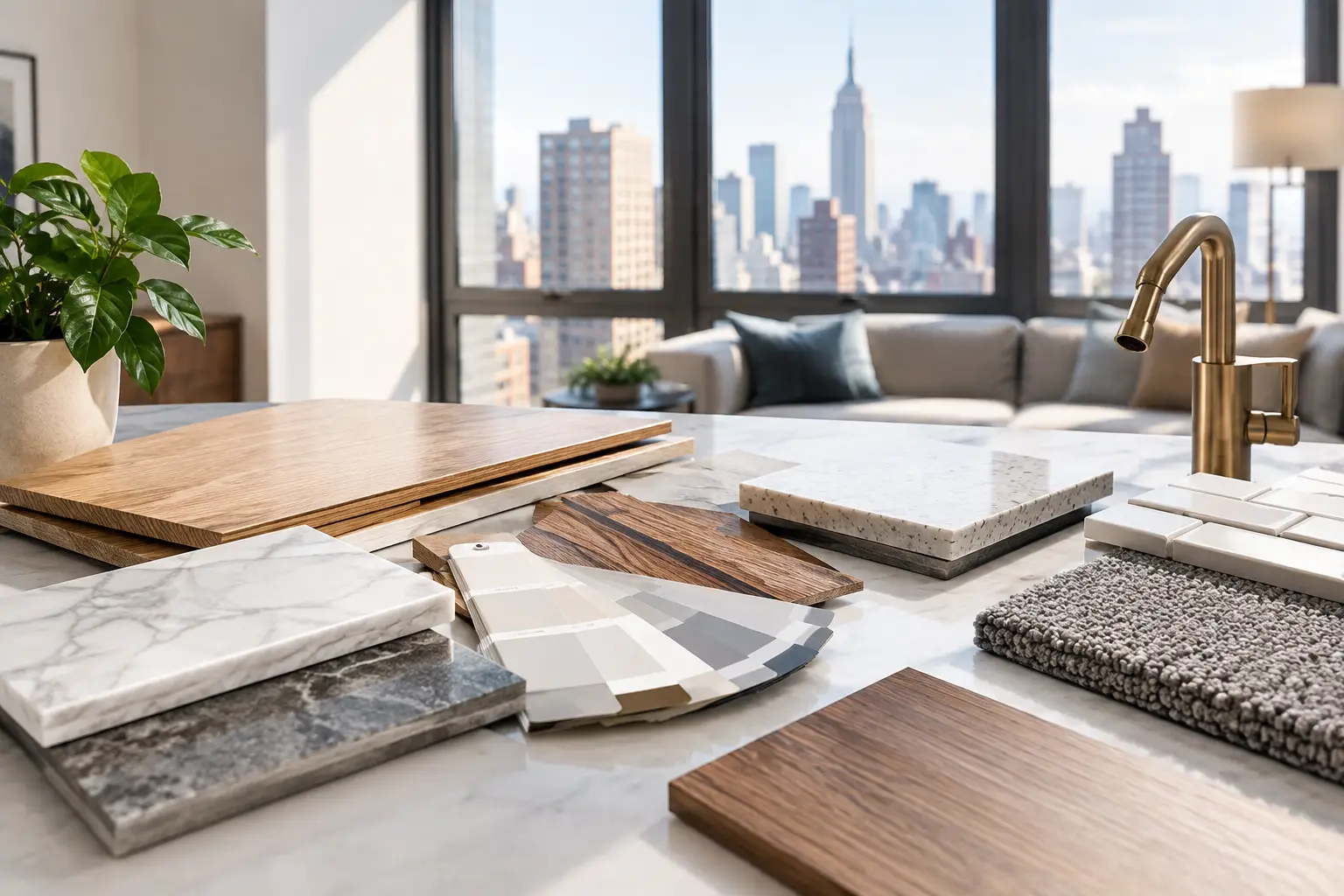
A Manhattan apartment renovation is rarely decided by finishes alone. The marble may be beautiful, but will it fit in the elevator, meet building requirements, arrive before construction begins, and perform well in a family kitchen? The best materials for apartment renovation are the ones that balance visual impact with daily durability, building logistics, maintenance expectations, and the long-term value of the home.
For a luxury renovation, material selection should not be treated as a shopping exercise. It is a coordinated design and construction decision. Each surface affects the next, from cabinet dimensions and appliance clearances to subfloor preparation, waterproofing, ventilation, and lead times. A polished result comes from choosing materials that look exceptional and work together under real NYC conditions.
Start With How the Apartment Will Be Used
Before selecting stone, wood, or fixtures, define how each room needs to perform. A pied-a-terre used a few weekends a month can support a different maintenance profile than a full-time family residence. A chef who cooks nightly needs a more forgiving countertop than an owner who primarily entertains. A prewar co-op with uneven floors calls for different flooring decisions than a newly constructed condominium.
This is where premium renovations benefit from a clear process. Materials should be reviewed alongside the existing conditions, the building's alteration agreement, freight-elevator limitations, required sound control, and the project schedule. A finish that looks right in a showroom can become an expensive compromise if it requires extensive remediation on site or cannot be delivered within the building's permitted work hours.
Flooring That Looks Refined and Performs Well
Flooring sets the visual tone of an apartment and takes more daily wear than nearly any other finish. In Manhattan homes, engineered hardwood is often the most practical choice for main living areas and bedrooms. It offers the warmth and character of real wood while providing greater dimensional stability than solid hardwood, especially where minor changes in humidity are a concern.
Wide-plank European oak remains a strong choice for a calm, tailored look. Matte or low-sheen finishes are particularly effective because they soften light, conceal minor scratches better than high-gloss finishes, and feel appropriate in both prewar and contemporary interiors. The quality of the wear layer and the installation system matter as much as the species or stain color.
In apartments, acoustic requirements deserve early attention. Many co-ops require a sound-rated underlayment, often with specific impact insulation criteria. That requirement can affect floor height, transitions at doors, and appliance or millwork clearances. Planning for it before cabinetry is fabricated prevents avoidable adjustments later.
For kitchens, entry areas, and baths, porcelain tile is a dependable option. Modern large-format porcelain can resemble natural stone with less absorption and less ongoing maintenance. It is especially useful when homeowners want the appearance of limestone, concrete, or marble but prefer a surface that is less vulnerable to staining and etching.
Countertops: Natural Stone or Engineered Surface?
The right countertop depends on how the kitchen will be used, not just the look of the slab. Natural marble delivers unmistakable depth, veining, and a finish that develops character over time. It is an excellent choice for homeowners who appreciate living finishes and understand that etching and light wear are part of the material's story.
For a high-use kitchen, quartzite is often a more forgiving natural-stone option. It provides dramatic movement and strong heat resistance, though performance varies by slab and proper sealing remains essential. Not every stone marketed under a particular name has identical properties, which is why a fabricator's review and a sample test are worthwhile before final approval.
Engineered quartz remains a practical option for clients who prioritize consistency and easy care. It offers a broad range of colors and can work beautifully in streamlined, contemporary kitchens. However, it is not the right answer for every application. Quartz can be sensitive to high heat, and its uniformity may not provide the visual depth some luxury interiors require.
For many Manhattan renovations, the strongest approach is selective use. A dramatic marble or quartzite island can become the focal point, while a more durable complementary material serves the perimeter counters or hardworking pantry area. This preserves the design intent without asking one surface to solve every functional need.
Do Not Overlook Edge Details and Backsplashes
A countertop is more than its material. Thickness, edge profile, seams, waterfall panels, and backsplash height all shape the finished appearance. Full-height stone backsplashes create a clean, elevated composition and reduce grout lines behind the range. They also require careful templating, particularly around outlets, pot fillers, and hood details.
Cabinetry Built for NYC Kitchens
Cabinetry is where premium material choices become most visible in daily life. High-quality plywood box construction, durable hardware, precise door alignment, and professionally finished fronts are foundational. For a renovation intended to last, focus on what is inside the cabinet as much as what is visible from across the room.
Wood veneer cabinetry offers natural variation and warmth, making it well suited to sophisticated, modern spaces. Rift-cut white oak, walnut, and smoked oak can anchor an entire apartment palette. Painted cabinetry provides greater color flexibility and can feel especially appropriate in classic prewar kitchens, but it may show impact marks more readily over time than a textured wood finish.
Lacquered and high-gloss fronts have their place in sleek contemporary homes, although they require more careful maintenance and reveal fingerprints more easily. For busy households, a satin finish, textured laminate, or wood veneer can offer a more practical balance between refinement and resilience.
Cabinet interiors should also be specified intentionally. Full-extension soft-close drawers, organized pullouts, integrated waste systems, appliance panels, and interior lighting improve function without adding visual clutter. In smaller Manhattan kitchens, these details often provide more value than simply adding more cabinets.
Bathroom Materials Need a Different Standard
Bathrooms demand materials that can handle moisture, daily cleaning, and close-range scrutiny. Porcelain is one of the most reliable wall and floor materials because it is dense, versatile, and available in sizes and finishes suited to nearly any design direction. A slip-resistant floor finish is essential in shower areas, even when the rest of the room uses a smoother tile.
Natural stone can create a truly luxurious bath, but it needs the right setting. Honed marble on walls or vanity tops can be exceptional when the homeowner accepts its maintenance needs. On shower floors, however, smaller mosaics are often preferable because the additional grout joints improve traction and allow the surface to follow the required slope toward the drain.
Large-format slabs reduce grout and create a striking spa-like appearance, but they add weight and demand experienced handling. In a high-rise, the logistics of delivery, staging, cutting, and installation must be planned well before the work begins. The same is true for wall-hung vanities, oversized mirrors, and heavy stone tops, all of which may require proper blocking and coordination behind finished walls.
Paint, Metal, and Glass Complete the Design
Paint is often treated as a final decision, but it should be coordinated with the fixed materials from the start. Premium low- or zero-VOC paints improve indoor comfort and are well suited to occupied buildings where odor control matters. Eggshell or satin finishes typically perform well on walls, while trim and doors may benefit from a more durable finish selected for the home's architectural style.
For hardware, fixtures, and metal accents, avoid choosing every finish independently. Polished nickel, unlacquered brass, aged bronze, and matte black can each be successful, but the combination needs discipline. In many refined apartments, one primary metal finish with a deliberate secondary accent feels more cohesive than a room full of competing tones.
Glass deserves the same level of attention. Low-iron glass is clearer than standard glass and is particularly effective for shower enclosures, wine displays, and interior partitions. In older apartments, custom glass can also solve layout challenges while bringing light deeper into the home without sacrificing separation.
Plan Materials Around Approval, Delivery, and Installation
The most beautiful selections can still create risk if they are ordered without a complete project plan. Co-op and condo boards may request product specifications, insurance documentation, drawings, or approval for plumbing and electrical changes. Buildings may also restrict delivery hours, require elevator protection, or limit where materials can be staged.
Lead times are equally important. Custom cabinetry, specialty stone, imported tile, and certain plumbing fixtures can require months rather than weeks. Ordering decisions should be tied to an itemized schedule, verified field measurements, and clear responsibility for receiving, inspecting, and protecting materials before installation.
At Home Design & Co, material decisions are integrated into the broader renovation process because this is where design, construction, and logistics meet. The goal is not simply to select premium finishes. It is to ensure those finishes arrive, fit, install, and perform exactly as intended.
A well-renovated apartment should feel effortless long after the final walk-through. Choose materials that suit the architecture, support the way you live, and can be installed with the care a Manhattan home deserves. When each selection is evaluated through that lens, the finished space gains more than visual appeal - it gains lasting confidence.