

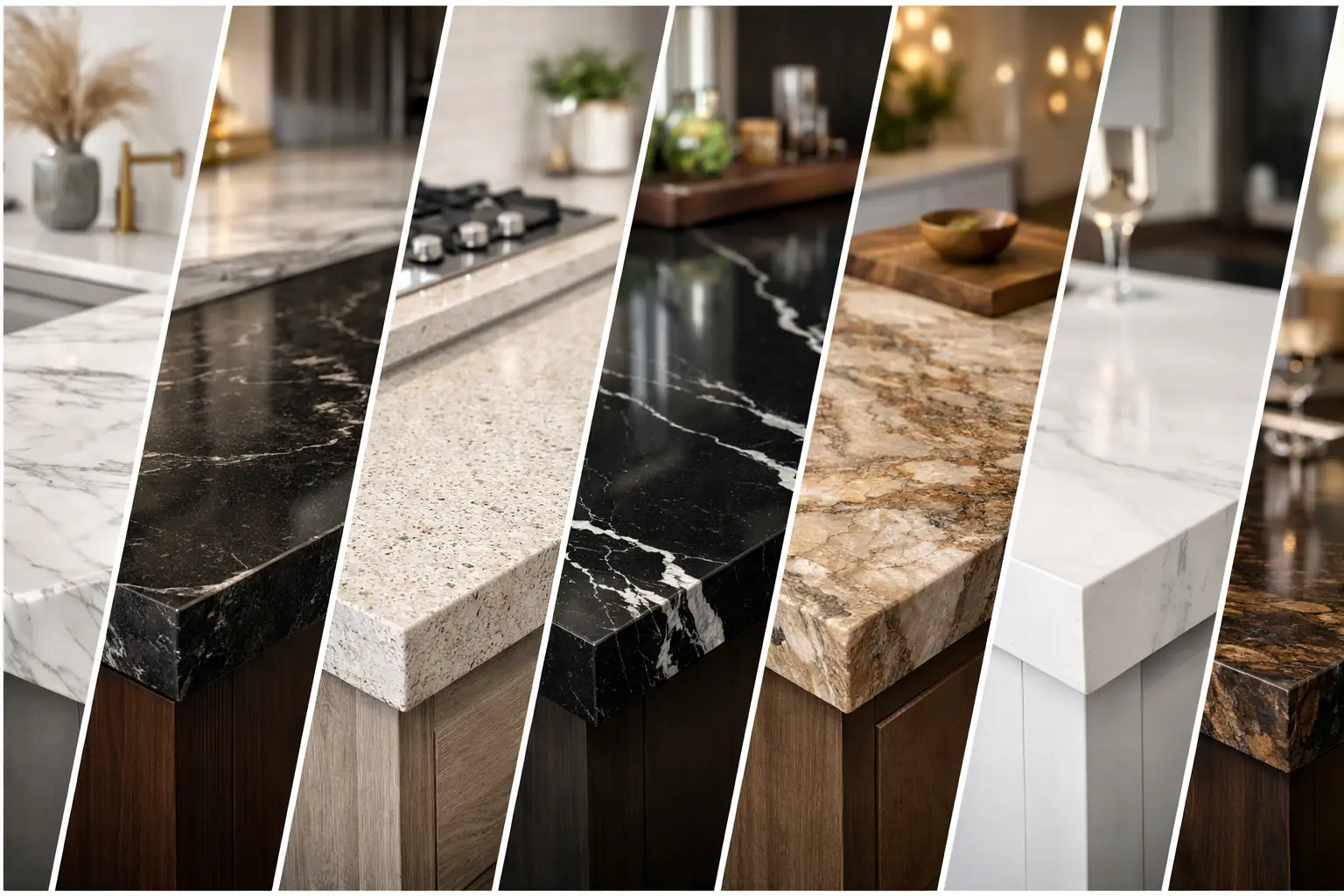
A luxury kitchen rarely gets judged first by the appliances. It gets judged by the surfaces - especially the countertop that anchors the room, catches the light, and takes daily use without losing its presence. When homeowners ask about the best countertops for luxury kitchens, the right answer is not just about appearance. It is about performance, maintenance, edge detail, slab movement, and how the material will live in a high-value Manhattan home.
In upscale renovations, countertop selection sits at the intersection of design and project management. A beautiful slab can still be the wrong choice if it stains too easily for the household, limits the sink configuration, or creates install challenges in a co-op with tight delivery rules. The best decision comes from understanding where luxury materials truly differ.
What defines the best countertops for luxury kitchens?
In a premium kitchen, the countertop has to do more than look expensive. It should support the design language of the home, hold up to the way the space is actually used, and justify its place in the investment. That usually means evaluating five factors together: appearance, durability, maintenance, fabrication flexibility, and long-term value.
Appearance is the obvious starting point. Some clients want dramatic movement and natural variation. Others want a quieter, more tailored look with controlled veining. Durability matters just as much, especially in kitchens that see frequent entertaining, heavy cooking, or young children. Then there is maintenance. A material that looks perfect in a showroom may become frustrating if the owner does not want to think about sealing, etching, or immediate cleanup.
Fabrication also deserves more attention than it usually gets. Thickness, edge profile, slab size, seam placement, waterfall panels, integrated backsplashes, and cutouts all affect the final result. In high-end remodels, these details are often what separate a merely nice kitchen from one that feels fully resolved.
1. Marble
Marble remains the benchmark for classic luxury. It has depth, softness, and natural veining that engineered materials still struggle to replicate convincingly. In prewar apartments, townhouses, and traditionally detailed kitchens, marble can feel exactly right.
The trade-off is well known. Marble is softer and more porous than several competing materials, and it can etch from acidic ingredients like lemon juice or vinegar. That does not make it a poor choice. It simply makes it a choice for homeowners who appreciate patina or who want a more formal kitchen that is not exposed to constant hard use.
For many luxury clients, marble works best as a deliberate design decision rather than a default one. It is especially compelling on statement islands, pastry stations, or kitchens where visual refinement matters more than a perfectly unchanged surface over time.
2. Quartzite
Quartzite is often one of the strongest answers for homeowners who want the beauty of natural stone without as much vulnerability as marble. It offers a high-end look, often with elegant movement and light coloration, but typically delivers better resistance to scratching and etching.
This is where material knowledge matters. Not every slab marketed as quartzite performs the same way. Some are harder and more durable than others, and testing should happen before final selection. In a luxury remodel, assumptions are expensive. Confirming how a specific slab responds to staining, scratching, and acids is part of making a sound choice.
For busy Manhattan households, quartzite often strikes the best balance between sophistication and practicality. It feels elevated, natural, and substantial without requiring the same level of acceptance around wear that marble does.
3. Quartz
Quartz is a leading option for clients who want a polished, controlled finish with lower maintenance. Because it is engineered, it offers consistency in pattern and color that natural stone does not. That can be a major advantage in sleek contemporary kitchens where symmetry and predictability are part of the design.
Quartz is non-porous and generally easy to care for, which appeals to homeowners who want a luxury result without ongoing sealing concerns. It is particularly effective in family kitchens and high-use apartments where convenience matters. Spills are less stressful, upkeep is simple, and the surface tends to age in a more uniform way.
The main trade-off is authenticity. Some quartz designs are excellent, but experienced eyes can still tell the difference between engineered patterning and the natural complexity of stone. If the goal is warmth, individuality, and one-of-a-kind movement, quartz may feel too controlled. If the goal is crisp execution and easier ownership, it is a strong contender.
4. Granite
Granite has lost some attention in recent years, largely because design preferences shifted toward marble looks and softer palettes. That does not change the fact that granite remains one of the most durable natural countertop materials available.
In the right kitchen, granite performs exceptionally well. It resists heat well, stands up to heavy use, and offers a level of toughness that many homeowners appreciate. The challenge is aesthetic selection. Some granites feel dated, while others feel architectural, refined, and quietly luxurious. The difference comes down to slab choice.
For homeowners who cook often and want natural stone with dependable performance, granite deserves more consideration than it usually gets. In darker, moodier kitchens or spaces with strong metal and millwork details, the right granite can look sophisticated rather than conventional.
5. Soapstone
Soapstone is a more understated luxury choice. It does not aim for high gloss drama. Instead, it offers a rich, velvety appearance and a lived-in elegance that works beautifully in tailored kitchens.
One of its advantages is that it is non-porous and resistant to staining. It also handles heat well. Its softer nature means it can scratch or mark more easily, but many owners see that as part of its character rather than a flaw. Over time, soapstone develops depth and personality.
This material tends to appeal to homeowners who want something distinctive and confident without being flashy. It is especially effective in kitchens that lean historic, artisanal, or quietly bespoke.
6. Porcelain slab
Porcelain slab has become more relevant in luxury kitchens because it offers impressive performance with a very clean visual profile. It is resistant to heat, staining, and UV exposure, and it can be fabricated in large formats for a streamlined appearance.
Its appeal is strongest in modern kitchens where thin profiles and minimalism are part of the design. It can also be used beyond the countertop for full-height backsplashes and wrapped surfaces, creating a unified look. That said, fabrication quality matters enormously. Porcelain requires skill, precision, and proper handling, especially around edges and cutouts.
This is not the material to treat casually. In a high-end renovation, installer experience should carry as much weight as the slab itself. When executed well, porcelain feels sharp, current, and highly functional.
7. Butcher block as an accent
Wood is usually not the primary answer to the best countertops for luxury kitchens, but it can play a valuable supporting role. In select designs, butcher block adds warmth that stone alone cannot provide.
It works best as an accent rather than the dominant surface in most upscale Manhattan kitchens. A baking station, coffee area, or small prep zone can benefit from wood’s texture and visual softness. Used thoughtfully, it keeps the kitchen from feeling overly hard or sterile.
The limitation is maintenance. Wood requires regular care and is more vulnerable to moisture and wear. For most luxury projects, it is better treated as a design layer than a whole-room solution.
How to choose the right luxury countertop material
The best material depends on how you live. If you want timeless prestige and are comfortable with natural aging, marble may still be the right answer. If you want natural beauty with stronger day-to-day resilience, quartzite is often the safer choice. If low maintenance is the priority, quartz earns its place.
Kitchen style also matters. A crisp new-build penthouse kitchen may call for the consistency of quartz or the precision of porcelain. A classic Upper East Side renovation may look far more convincing in marble or soapstone. The countertop should fit the architecture, not compete with it.
There is also the practical side of installation. In New York City, slab access, freight elevator rules, site protection, and building approvals can influence what is feasible. Large islands, waterfall ends, and bookmatched backsplashes are not just design ideas. They are execution details that need proper planning. That is one reason clients working with a fully managed renovation partner like Home Design & Co often avoid the costly disconnect between selection and installation reality.
Best countertops for luxury kitchens by priority
If your priority is visual prestige, marble and quartzite usually lead the conversation. If your priority is easy maintenance, quartz and porcelain stand out. If your priority is toughness under heavy cooking, granite and quartzite are hard to dismiss.
For resale, neutral and broadly appealing materials tend to perform best, but resale should not be the only filter in a home you plan to enjoy for years. The better question is whether the countertop supports the level of living, entertaining, and visual quality you expect from the space.
A luxury kitchen should feel composed, not overcomplicated. The right countertop helps achieve that because it brings together cabinetry, hardware, lighting, and layout into one finished statement. When the material suits both the design and the household, the result feels effortless - which is usually the clearest sign that the choice was right.