

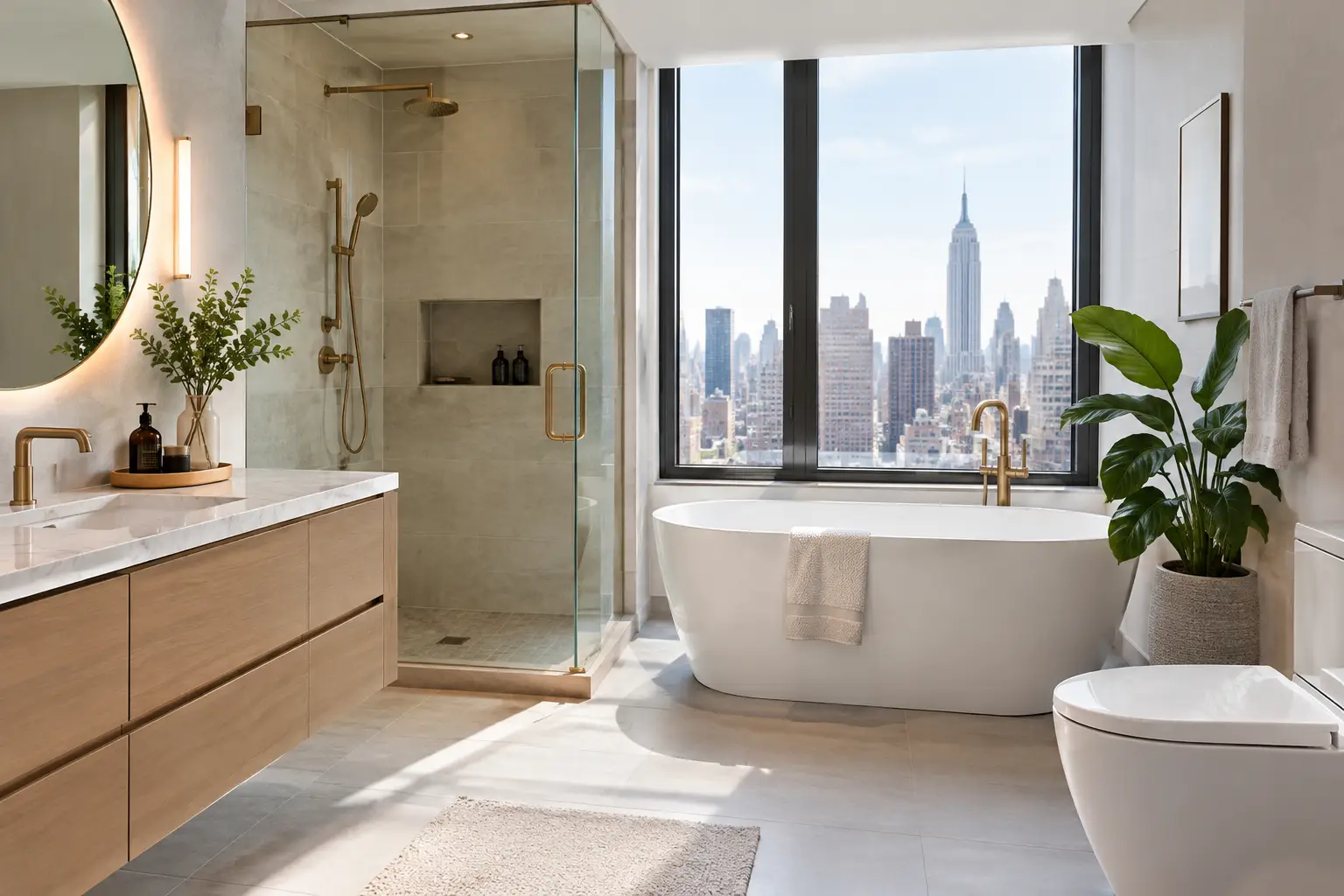
A Manhattan bathroom does not need to be large to feel exceptional. It needs to work with precision: storage that disappears, lighting that flatters, finishes that hold up, and a layout that makes the first hour of the day easier. The leading bathroom renovation trends 2026 reflect that standard. Homeowners are moving beyond rooms designed only for photos and choosing bathrooms that feel personal, calm, and deliberately built for daily use.
For luxury apartments and townhomes, the strongest ideas are not about chasing novelty. They are about creating a more tailored room while accounting for the realities of New York construction: co-op rules, limited access, plumbing constraints, long lead times, and the need for a plan that is clear before work begins.
Bathroom Renovation Trends 2026: Warmth With Discipline
The cool gray, highly uniform bathroom is giving way to a warmer, more layered approach. Think honed stone with natural movement, off-white tile, walnut or oak vanities, aged brass accents, and soft paint colors with depth. The goal is not a rustic look. It is refinement without sterility.
Natural stone remains a defining material, particularly in shower walls, vanity tops, and carefully selected feature areas. Marble, quartzite, limestone-look porcelain, and textured ceramic tile all have a place, depending on the level of maintenance a homeowner is willing to accept. A genuine marble slab can bring unmatched character, but it requires sealing and realistic expectations around etching. High-quality porcelain offers a more forgiving alternative in a family bathroom or a frequently used guest bath.
The best material palettes use contrast sparingly. A warm wood vanity can ground pale stone walls. Brushed nickel can make a more traditional apartment feel current without becoming trendy. Matte black still works in the right setting, but it is no longer the default choice for every fixture and shower enclosure.
Texture Is Replacing Excess Pattern
Patterned tile is not disappearing, but it is being used more selectively. In 2026, texture is often the more enduring choice: ribbed tile, handmade-look ceramic, fluted glass, plaster-like wall finishes, or a stone surface with visible veining. These materials create visual interest without making a compact bathroom feel busy.
In prewar apartments, texture can also provide a thoughtful bridge between original architectural character and modern performance. The key is proportion. A dramatic tile may look excellent on a shower wall, but covering every surface can overwhelm a room with limited square footage.
Storage That Looks Built In, Not Added On
Luxury bathroom design is increasingly measured by what you do not see. Countertop clutter, exposed cords, awkward medicine cabinets, and insufficient drawer space can undermine even the finest materials. That is why integrated storage is one of the most practical bathroom renovation trends 2026 has to offer.
Vanities are becoming more customized, with deep drawers, interior organizers, integrated outlets, and dedicated space for skin care, hair tools, and daily essentials. Floating vanities remain popular because they visually expand the floor area, but a furniture-style vanity may be the better fit for a larger primary bathroom or a home with traditional detailing.
Recessed medicine cabinets are also receiving more attention. A properly planned model can offer meaningful storage without projecting into the room. In a Manhattan renovation, however, wall conditions matter. Plumbing, electrical lines, structural elements, and building requirements may limit what can be recessed. This is exactly the kind of detail that should be reviewed during design, not discovered after demolition.
Thoughtful Niches Make Small Bathrooms Work Harder
Shower niches, ledges, and integrated shelving are no longer optional finishing touches. They are part of the layout. A well-positioned niche keeps bottles off the shower floor, while a stone ledge can add storage without introducing another visual element.
The trade-off is coordination. Niche placement must align with tile layout, waterproofing, plumbing, and the people who will actually use the shower. A niche that looks centered on a rendering but sits too low, too high, or behind a shower fixture is a missed opportunity.
Spa Features With Real Daily Value
The spa-inspired bathroom is evolving. Instead of filling the room with every available amenity, homeowners are prioritizing features they will use consistently. A spacious curbless shower, an ergonomic bench, radiant heated floors, and a hand shower on a slide bar offer comfort that lasts well beyond the first reveal.
Wet rooms, where the shower area is open to the broader bathroom and the entire floor is waterproofed, remain an appealing option for certain homes. They can create a dramatic, hotel-like effect and make a small bath feel more open. But they require careful slope planning, waterproofing, ventilation, and approvals. In many apartments, the existing floor structure and plumbing arrangement will determine whether this is feasible.
Freestanding tubs continue to be desirable in larger primary bathrooms, especially where there is a view or generous natural light. In a tighter New York footprint, though, a well-designed shower may add more value to daily life than a tub that is rarely used. The right decision depends on the home, household, resale goals, and available space.
Lighting Is Becoming a Design Layer
One central ceiling fixture is no longer enough. Bathrooms need layered lighting that supports grooming, nighttime use, and atmosphere without casting harsh shadows. The most successful projects combine ceiling lighting, decorative sconces at the mirror, and subtle accent lighting at vanities or niches.
Backlit mirrors remain popular, but they work best when paired with proper face lighting. Light from behind a mirror can create a soft glow, yet it does not always provide the even illumination needed for shaving or applying makeup. Side-mounted sconces or well-positioned vertical fixtures are usually more functional.
Dimmers, warm color temperatures, and separate lighting zones make a noticeable difference. They also allow a bathroom to shift from bright and task-focused in the morning to quiet and low-lit at night. For many homeowners, this is a better investment than an overly complicated smart system that requires constant troubleshooting.
Fixtures Are More Personal, Less Matchy-Matchy
Bathrooms are moving away from fixture packages that match perfectly in every detail. In their place, homeowners are choosing coordinated finishes with a more collected feel. For example, polished nickel faucets may sit comfortably beside antique brass cabinet hardware, provided the overall palette is intentional.
Wall-mounted faucets, sculptural vessel sinks, and statement shower hardware can make a strong impression, but they require early planning. Wall-mounted plumbing changes the rough-in requirements behind the wall. Vessel sinks may reduce usable counter space or create splashing if the faucet height is wrong. A premium result comes from resolving these practical details before materials are ordered.
Water efficiency is also a consideration, particularly for owners who want an environmentally responsible renovation without sacrificing performance. Modern shower systems and toilets can reduce water use significantly, but product selection should balance efficiency, pressure, maintenance, and the building's existing plumbing conditions.
A Better Trend: Designing for the Building, Not Just the Mood Board
The most valuable trend for 2026 is not a finish or fixture. It is a more disciplined renovation process. In Manhattan, a bathroom project touches building management, insurance, permits, delivery schedules, work hours, elevator protection, and plumbing coordination. A beautiful design only becomes a successful renovation when those details are managed with the same care as the tile selection.
Before committing to a layout, homeowners should understand what can realistically move, what requires approval, and where costs may change based on concealed conditions. Detailed scope development and itemized estimating reduce uncertainty. So does reviewing fixtures early, especially custom vanities, stone, glass, and specialty plumbing components with longer lead times.
A bathroom should feel effortless when it is complete. That ease is created through careful design, qualified construction, and active coordination behind the walls. For Manhattan homeowners planning a refined, fully managed transformation, Home Design & Co approaches the work with that level of control from the first consultation through final installation.
The strongest bathroom renovations in 2026 will not look copied from a showroom. They will feel considered: made for the apartment, the building, and the way the owner wants to live every day.